 Protection Desk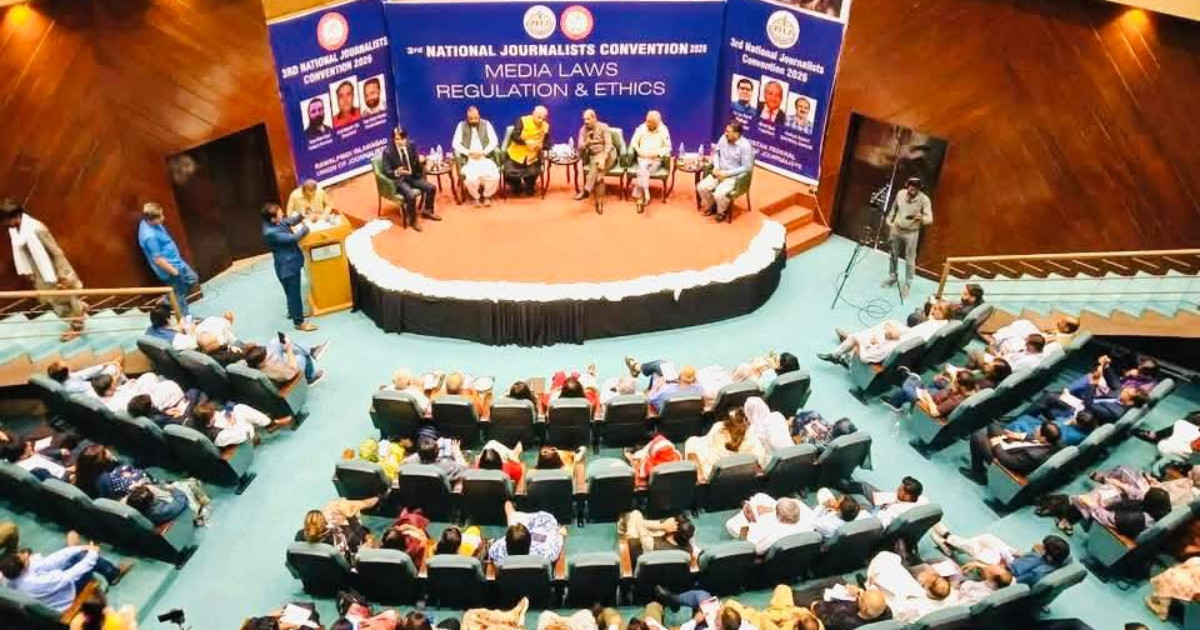
Pakistan’s leading journalist bodies and media workers have issued a sweeping declaration rejecting the Prevention of Electronic Crimes Act (PECA) 2025 amendments, calling them a “Black Law” designed to suppress press freedom and intimidate journalists across the country. The declaration was adopted during the National Journalists Convention on Media Laws, Regulations, and Ethics in Islamabad, where participants accused authorities of escalating judicial harassment, restricting journalists’ movement, and creating an atmosphere of fear through legal and administrative pressure.
Convention raises alarm over media pressure
The convention demanded Parliament review all media laws deemed inconsistent with Article 19 of Pakistan’s Constitution, which guarantees freedom of expression and press freedom subject to reasonable restrictions. Delegates said assurances previously given by the government that media laws would not be weaponized against journalists had been violated. Participants cited incidents involving journalists being offloaded from flights, restrictions on foreign travel, and legal cases initiated under PECA as evidence of increasing pressure on independent journalism. The declaration called for the immediate withdrawal of all cases registered against journalists under the law. The convention also criticized the use of state advertising as leverage against media organizations, alleging that public-sector advertisements were being withheld to influence editorial policies and suppress critical reporting.
Media layoffs and labor concerns highlighted
The declaration expressed serious concern over retrenchments in Pakistan’s media industry, particularly in electronic media, where journalists said layoffs had intensified despite worsening economic conditions and inflation. Delegates accused media owners of using third-party hiring arrangements to bypass Wage Board obligations and labor protections. The convention described the practice as an attempt to weaken journalists’ rights and avoid compliance with labor laws governing salaries, benefits, and job security. The gathering demanded immediate implementation of the 8th Wage Board Award and the launch of the 9th Wage Board process to cover print, electronic, and digital media workers. It also called for mandatory health insurance, gratuity, and Employees’ Old-Age Benefits Institution registration for journalists and media employees.
Calls for stronger journalist protection laws
In a separate resolution, the Pakistan Federal Union of Journalists urged provincial assemblies in Punjab, Khyber Pakhtunkhwa, and Balochistan to enact journalist protection legislation similar to existing frameworks elsewhere in the country. The resolution also asked the federal and Sindh governments to strengthen the Protection of Journalists and Media Professionals Act, 2021, including measures to ensure the operational independence and adequate resourcing of the commission established under the law. Convention participants said the protection of journalists and media workers was essential for democratic accountability and warned that economic pressure, legal intimidation, and censorship threatened the future viability of independent journalism in Pakistan. WHY THIS MATTERS: The declaration reflects mounting tension between Pakistan’s media community, state institutions, and media owners over censorship, digital regulation, and labor conditions. For journalists and media organizations, the convention highlights growing concerns about the use of legal and economic tools to shape editorial behavior, while also underscoring unresolved issues surrounding wages, job security, and protections for media workers. ATTRIBUTION: Reporting by JournalismPakistan, based on publicly available resolutions and statements issued by the Pakistan Federal Union of Journalists during the National Journalists Convention in Islamabad on May 22, 2026.
Key Points
- Convention declared the 2025 PECA amendments a 'Black Law' that threatens press freedom.
- Delegates demanded Parliament review media laws to ensure compliance with Article 19 of the Constitution.
- Participants cited judicial harassment, flight offloading, travel restrictions and PECA cases against journalists.
- The declaration called for immediate withdrawal of all cases lodged under PECA against media workers.
- Convention criticised withholding of state advertising as leverage to influence editorial policies.
- Delegates urged safeguards for independent journalism and protections for media workers across Pakistan.
Key Questions & Answers
What did the convention decide about the PECA amendments?
Participants rejected the 2025 PECA amendments as a 'Black Law' and asked for the immediate withdrawal of cases against journalists and a parliamentary review of media laws.
Which concerns did delegates raise about treatment of journalists?
Delegates cited judicial harassment, cases under PECA, restrictions on foreign travel, offloading from flights and an atmosphere of fear created by legal and administrative pressure.
What did the convention say about state advertising?
They criticised the use of state advertising as leverage, alleging public-sector ads are being withheld to influence editorial policies and suppress critical reporting.
What actions did the convention demand from Parliament?
The convention demanded that Parliament review all media laws for consistency with Article 19, ensure protections for press freedom, and address misuse of laws against journalists.